




ClickBathrooms is now ShowerDoorBuilder — same team, same quality, new design tool
ClickBathrooms is now ShowerDoorBuilder — same team, same quality, new design tool
The Importance of Planning Your Shower Tray and Correctly Positioning Your Shower Door or Enclosure
When designing a new shower space whether it’s a full wet-room inspired setup or a traditional tray and enclosure configuration one of the most important yet often overlooked considerations is the relationship between the shower tray and the shower door or enclosure. Getting the positioning right is essential for comfort, usability, and above all, effective water management.
A well planned shower tray and correctly fitted enclosure work together to ensure that water flows in the direction it should into the tray and towards the waste protecting the rest of your bathroom from pooling, and long-term damage.
This article explains why tray and enclosure alignment matters, how shower trays are engineered to manage water, and what to consider during planning and installation.
Why Correct Shower Tray and Enclosure Positioning Matters
1. Preventing Leaks and Water Escaping the Shower Area
The single biggest reason to plan ahead is to avoid water escaping past the enclosure or door. Even the most high-performance seals and hinges can only do so much if the enclosure is not sitting correctly on the tray.
Proper positioning ensures:
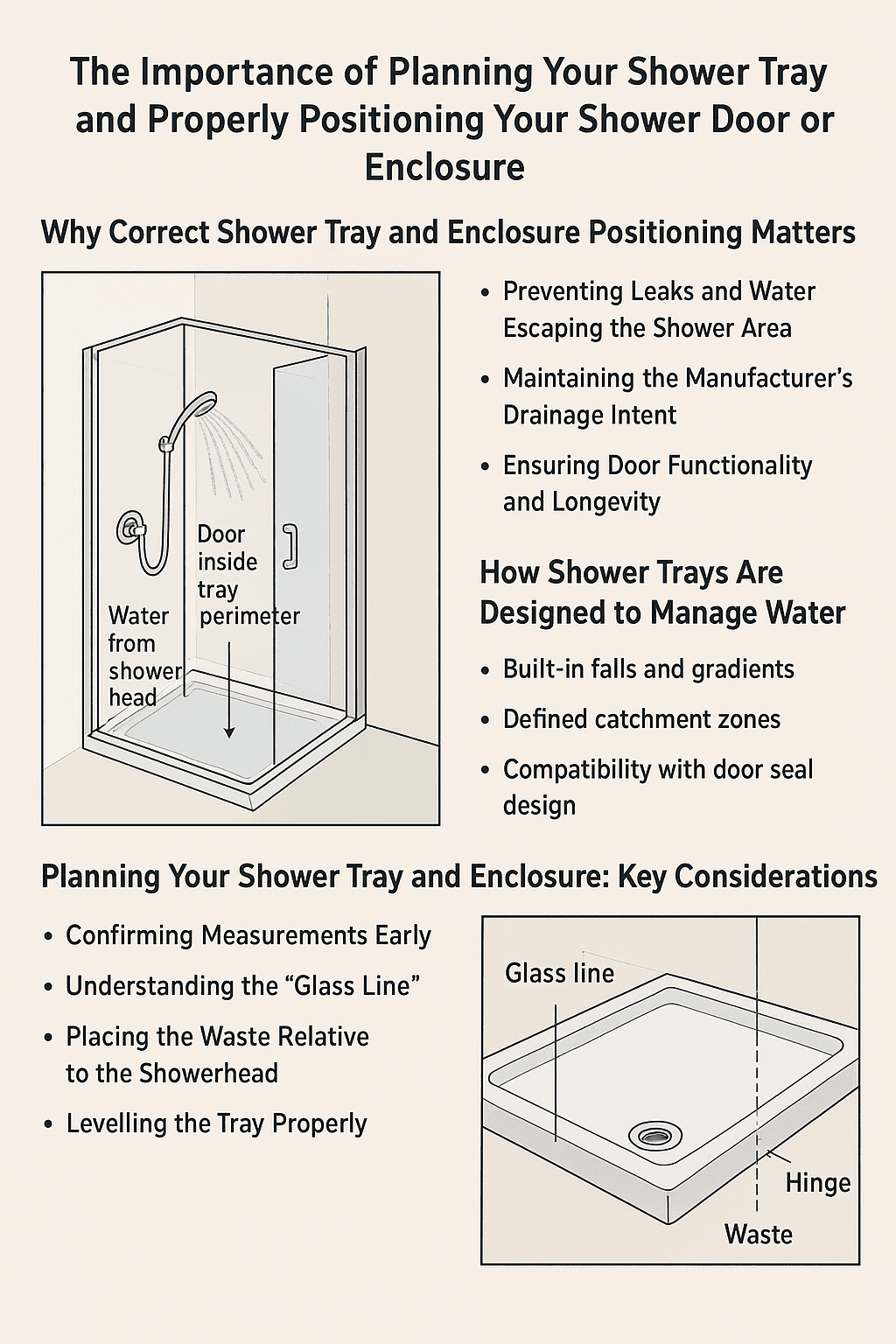
The door or fixed panel sits entirely within the perimeter of the tray
Water from the showerhead lands inside the tray’s catchment zone
Drips from the door fall onto the tray, not onto the bathroom floor
Incorrect alignment even by a few millimetres—can cause water to run past the enclosure, leading to wet floors, slippery surfaces, and potential long-term structural damage.
2. Maintaining the Manufacturer’s Drainage Intent
Shower trays are not flat. They are carefully designed with subtle gradients and directional falls to guide water back towards the waste. If the enclosure or glass is positioned outside its intended area, this engineered drainage system cannot function correctly.
Correct positioning helps the tray:
Catch all water runoff and direct it towards the waste
Allow the enclosure’s seals to work as designed
Prevent pooling in corners or on the outer edges
3. Ensuring Door Functionality and Longevity
A door that overhangs the edge of a tray or is set too far back from it can lead to:
Premature wear on seals
Reduced overall lifespan of the enclosure
Positioning the enclosure accurately preserves the performance and longevity of the door system.
How Shower Trays Are Designed to Manage Water
Shower trays are engineered products, created to direct water efficiently and safely back into the waste outlet. Understanding this design helps explain why enclosure alignment is so important.
1. Built-In Falls and Gradients
Every quality shower tray has a gentle slope, usually imperceptible to the naked eye, that leads towards the waste. These falls ensure:
Water drains naturally without pooling
The risk of overflow or splashing is reduced
The tray remains easy to clean
When an enclosure is placed correctly, all water remains within these controlled drainage zones.
2. Defined Catchment Zones
The flat area on a shower tray doesn’t extend all the way to the outer edges. Instead, the tray is designed so that:
The glass sits inside the engineered drainage area
Small splashes are captured and directed inward
The tray lip or raised edge prevents escape
If the enclosure is positioned incorrectly either too close to the edge or shifted off-centre the catchment zone cannot do its job.
Planning Your Shower Tray and Enclosure: Key Considerations
1. Confirming Measurements Early
Accurate measurements of:
The tray
The wall space
The intended glass or door
…ensure that everything lines up exactly as it should. Allowing room for out of square walls or slight variations is crucial in frameless designs.
Seal alignment
Aesthetically balanced placement
Always refer to CAD drawings or manufacturer instructions for this.
2. Placing the Waste Relative to the Showerhead
When possible:
Avoid positioning the waste directly under the showerhead
Ensure the falls direct water quickly to the outlet
Reduce splashback by keeping the spray within the deepest part of the tray
Correct door placement ensures water stays within this optimised drainage area.
4. Levelling the Tray Properly
Even with engineered falls, the tray must be level across its perimeter:
A tilting tray can cause water to run towards the door
This undermines the built-in gradient
Levelling should be checked meticulously during installation
5. Aligning Hinges and Glass to the Tray
Door hinges are designed to allow water to drip downwards and be caught by the tray. If the door is positioned too far:
Forward, drips fall onto the floor
Backwards, seals won’t sit correctly
To one side, water may bypass the catchment channels
This is why installing the enclosure before tiling the outside edges is often advisable—so it can be set precisely to the tray.
What Happens When Positioning Is Incorrect?
Misalignment—whether sideways, forward, or back—can lead to:
Water leaking onto the bathroom floor
Damp patches on surrounding walls or flooring
Seal failure and premature wear
Glass stress due to incorrect hinge position
Poor drainage and water pooling
Correct placement eliminates these issues and enhances the experience of using the shower every day.
Conclusion: A Well-Planned Tray and Enclosure Create a Better Shower
Shower trays are engineered systems, not simply “platforms” for water. They rely on precise alignment with the shower door or enclosure to function correctly. When the enclosure is installed exactly where the tray is designed to receive it, water flows naturally back towards the waste, seals operate as intended, and the shower area remains safe, dry, and efficient.
Taking the time to plan tray placement, understand glass lines, and install the enclosure in its intended position ensures your shower performs seamlessly for years to come—both functionally and aesthetically.



Hooton Group Limited T/A showerdoorbuilder.co.uk
Aizlewood Mill
Nursery Street
Sheffield, S3 8GG
United Kingdom
Company Number: 09689509
VAT Number: 234047531
© Copyright 2025


